
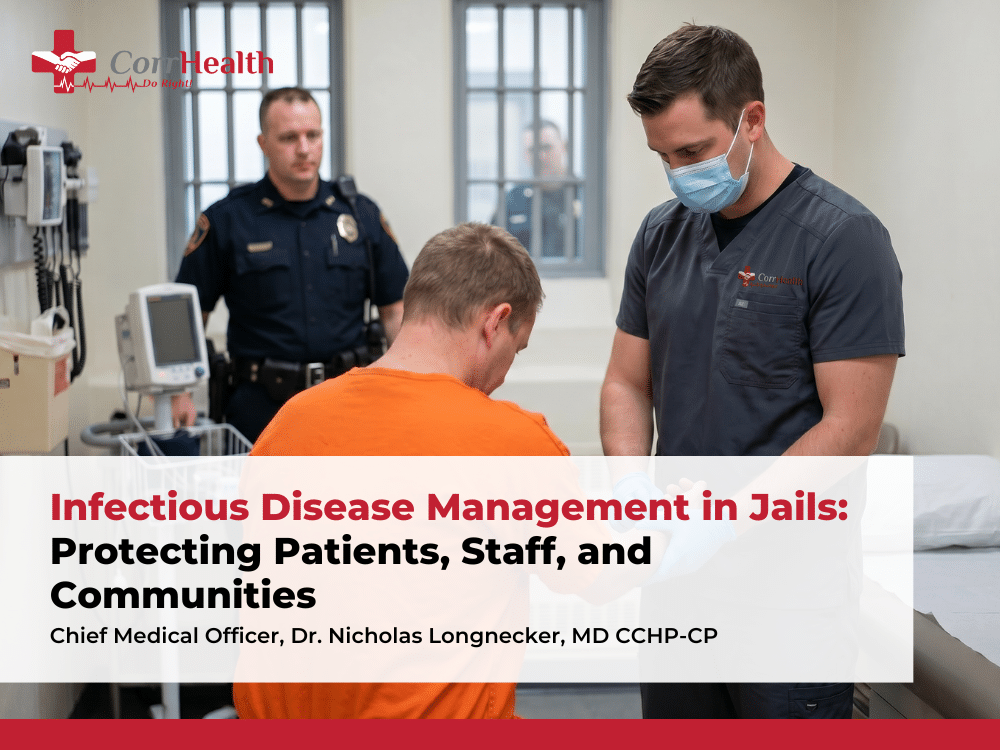
When most people think about healthcare in jails, they often picture emergency care, chronic disease management, or mental health services. What many don’t realize is that correctional facilities also play a critical role in managing infectious diseases. In fact, for some individuals, incarceration may be the first time they have meaningful access to healthcare in years.
Managing infectious diseases in a jail setting presents unique challenges. Unlike prisons, where populations are relatively stable, jails experience constant turnover.
Individuals may stay for only a few days or a few weeks before returning to the community. Many arrive with limited medical records, untreated medical conditions, or no established healthcare provider. Add in the realities of communal living, and it becomes clear why infectious disease management in jails must remain a priority.
The Role of Intake Screening in Infectious Disease Management
The work begins the moment an individual enters the facility. Intake screening is one of the most important tools available to correctional healthcare teams. A thorough intake screening helps identify individuals who may have symptoms of communicable illnesses, whether it is a persistent cough suggestive of tuberculosis, an infected wound, or signs of a viral respiratory illness.
Early identification allows healthcare teams to intervene quickly, reducing the risk of transmission and supporting effective disease management throughout the facility.
Tuberculosis: A Continued Focus in Correctional Healthcare
Tuberculosis remains one of the infectious diseases correctional healthcare providers are always mindful of. Although active TB is relatively uncommon, many individuals entering correctional facilities have risk factors that increase their likelihood of exposure, including homelessness, substance use disorders, and limited access to healthcare.
Early identification and appropriate isolation procedures remain critical components of successful infectious disease management in jails.
Managing Bloodborne Infectious Diseases
Bloodborne infections such as hepatitis C and HIV are frequently encountered in correctional settings. Because these conditions are more prevalent among incarcerated populations than in the general public, jails often serve as an important point of diagnosis and treatment.
The ability to identify previously undiagnosed infections, continue lifesaving medications, and connect patients to follow-up care can have a lasting impact that extends well beyond the walls of the facility.
Addressing Sexually Transmitted Infections
Sexually transmitted infections, including chlamydia, gonorrhea, and syphilis, are similarly common. While these diagnoses may not generate headlines, identifying and treating them improves individual health outcomes while reducing disease transmission within the broader community.
This preventive approach is a key aspect of infectious disease management and public health.
Common Infectious Diseases Seen in Jails
Not every infectious disease challenge involves a complex diagnosis. Some of the most common conditions correctional healthcare teams encounter are skin and soft tissue infections.
Anyone who has worked in a detention facility has likely seen their share of abscesses, cellulitis, and infected wounds. Early recognition, timely treatment, and patient education often make the difference between a minor issue and a hospitalization.
Respiratory Illnesses and Disease Management in Congregate Settings
Respiratory illnesses continue to demand significant attention. Lessons learned during the COVID-19 pandemic reinforced what correctional healthcare professionals have long understood: communicable diseases can spread quickly in congregate settings.
Influenza, RSV, COVID-19, and other respiratory viruses require ongoing vigilance, particularly during peak respiratory illness seasons. Effective disease management requires proactive monitoring and rapid response.
Why Outbreak Preparedness Matters
Perhaps one of the most important lessons in correctional healthcare is that outbreak preparedness cannot begin when the outbreak starts. Facilities must have plans in place long before they are needed.
Screening protocols, isolation procedures, communication pathways, and relationships with local public health departments should all be established in advance.
We recently saw the value of that preparation firsthand at one of our facilities during a measles outbreak. Through rapid identification of symptomatic individuals, immediate implementation of isolation procedures, close collaboration with public health officials, and aggressive exposure management, the outbreak was successfully contained.
While no healthcare organization hopes to face a measles outbreak, the experience demonstrated how preparation, teamwork, and adherence to established protocols can prevent a challenging situation from becoming a crisis.
Prevention: The Foundation of Infectious Disease Management
Prevention remains the most effective strategy in infectious disease management.
Vaccination programs provide an opportunity to protect individuals who may have had limited access to preventive healthcare in the community. Depending on a patient’s history and risk factors, correctional healthcare teams may offer vaccines for influenza, hepatitis A, hepatitis B, COVID-19, tetanus, and other preventable diseases.
Good infection control practices extend beyond healthcare staff. Maintaining clean housing environments, ensuring access to hygiene supplies, and educating both staff and incarcerated individuals all contribute to a safer facility.
Successful infectious disease management in jails requires collaboration between healthcare professionals, correctional officers, facility administrators, and public health partners.
Continuity of Care After Release
One area that often receives less attention is continuity of care. Many individuals leave jail before their medical treatment is complete.
Whether a patient is receiving treatment for HIV, hepatitis C, tuberculosis, or another infectious disease, ensuring continuity after release benefits both the individual and the community. Effective discharge planning can help prevent treatment interruptions and improve long-term health outcomes.
The Public Health Impact of Infectious Disease Management in Jails
At its core, infectious disease management in jails is about more than treating illness. It is about protecting patients, staff, and communities.
Every successful screening, every vaccination administered, every outbreak prevented, and every patient connected to follow-up care represents an opportunity to improve public health.
Correctional healthcare sits at a unique intersection of medicine and public safety, and few areas demonstrate that responsibility more clearly than infectious disease management.