
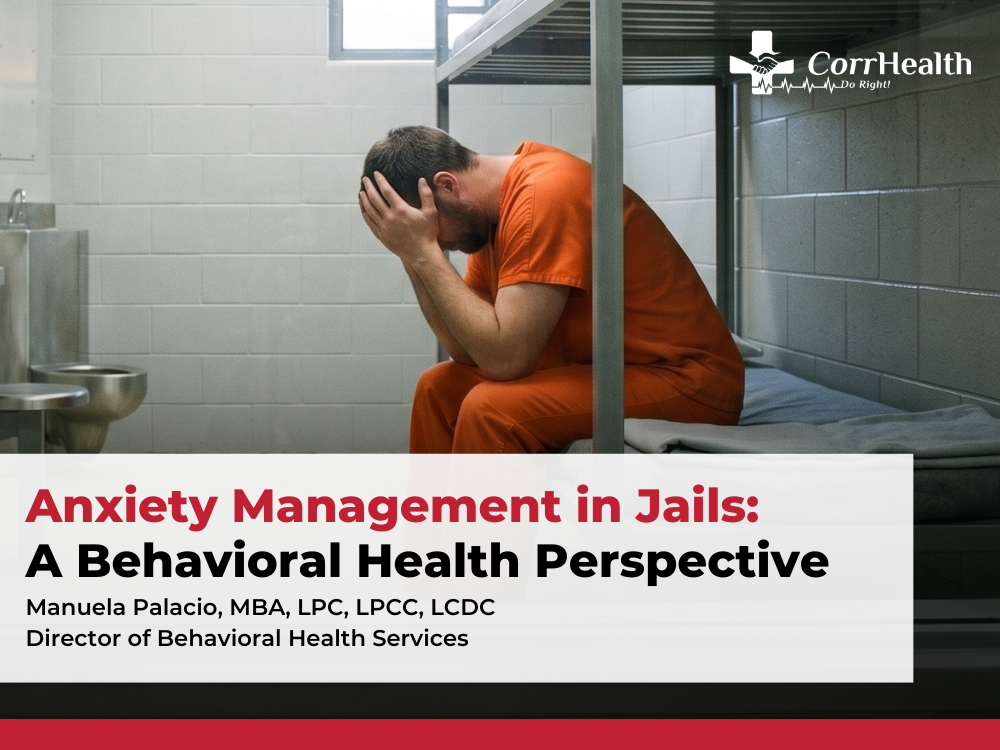
Anxiety is a feeling experienced by all human beings. It is a normal and adaptive response to perceived threat, designed to protect us. At its core, anxiety functions as the body’s alarm system.
When danger is anticipated, the autonomic nervous system activates what is commonly known as the fight, flight, freeze, or fawn response. Heart rate increases, breathing quickens, muscles tense, and focus sharpens.
In most environments, this response is temporary. Once the threat passes, the body begins to regulate.
In a correctional setting, however, the sense of threat does not always resolve. The environment itself can sustain this heightened state. As a result, what begins as a protective response can become prolonged, amplified, and ultimately maladaptive. This is what makes anxiety in jail both common and complex.
Why Anxiety in Jail Is So Common
Anxiety in jail is not only common, it is often predictable. Incarceration introduces multiple stressors at once, including loss of autonomy, concerns about personal safety, disrupted sleep, isolation, and separation from family and support systems. Individuals may also face legal uncertainty and fear of losing employment or relationships.
Each of these factors increases stress on its own. Together, they create an environment in which the nervous system remains constantly activated. This makes effective anxiety management in jails both challenging and essential.
Assessment Is an Ongoing Process
Behavioral health teams begin with an initial evaluation when appropriate, assessing an individual’s current symptoms, psychiatric history, substance use, trauma exposure, suicide risk, and overall level of functioning. This step is critical in distinguishing between temporary stress reactions and more complex conditions such as anxiety disorders, trauma-related disorders, mood disorders, or substance withdrawal.
However, assessment does not stop there.
In correctional settings, anxiety may not be immediately visible. Individuals entering custody may be in crisis, intoxicated, or experiencing withdrawal, which can mask underlying symptoms. For this reason, anxiety assessment must be ongoing. Behavioral observations, sick call requests, custody reports, and follow-up mental health visits all contribute to a more complete clinical picture.
How Anxiety Often Presents
Anxiety in jail does not always present in obvious ways. Many individuals do not describe their symptoms using clinical language. Instead, anxiety often appears through behavior.
Common presentations include irritability, agitation, insomnia, panic episodes, repeated physical complaints, refusal to participate in programming, or rule violations. Physical symptoms such as chest tightness, headaches, gastrointestinal distress, and shortness of breath are also frequent.
In some cases, hypervigilance may be misunderstood as defiance or paranoia. This highlights the importance of proper assessment and clinical interpretation when addressing anxiety in jail settings.
A Balanced Approach to Anxiety Management
The goal of correctional behavioral health is not to pathologize normal stress, but also not to overlook clinically significant impairment. Effective anxiety management requires distinguishing between the two and responding appropriately.
Anxiety management in jails must be both structured and collaborative. Medication may be appropriate when symptoms are severe, persistent, or significantly impair functioning. However, medication alone is rarely sufficient in an environment where stressors remain present.
Behavioral health interventions play a critical role. These include psychoeducation about the stress response, cognitive behavioral strategies to address unhelpful thought patterns, grounding techniques to reduce physical symptoms, and skill-building approaches that help individuals regulate their emotions.
Teaching individuals to recognize early signs of anxiety and apply practical coping strategies is a key part of effective care.
Why Anxiety Management Matters Operationally
Unmanaged anxiety does not only affect the individual. It also has a measurable impact on facility operations.
Higher levels of anxiety are associated with increased disciplinary incidents, greater use of crisis services, more frequent placement on suicide watch, and increased medical complaints. These outcomes place additional strain on both custody and healthcare teams.
Proactive anxiety management is therefore not only clinically appropriate, but operationally necessary.
Continuity of Care Beyond Release
One of the most important aspects of anxiety management occurs at the time of release. Continuity of care is essential.
Reentry into the community introduces new stressors, including housing instability, employment challenges, family reintegration, and exposure to previous environments that may contribute to substance use or instability. For individuals whose anxiety has been partially stabilized during incarceration, a sudden disruption in care can lead to rapid decline.
Providing strong community linkage, including warm handoffs to outside providers, helps improve engagement and supports long-term outcomes.
A Broader Impact
When anxiety is properly assessed and managed, the benefits extend beyond symptom relief. Individuals are better equipped to function, facilities operate more smoothly, and communities benefit from more successful reintegration.
Anxiety management in jails is not just about reducing symptoms. It is about supporting stability, improving outcomes, and delivering meaningful behavioral health care in a challenging and often overlooked environment.